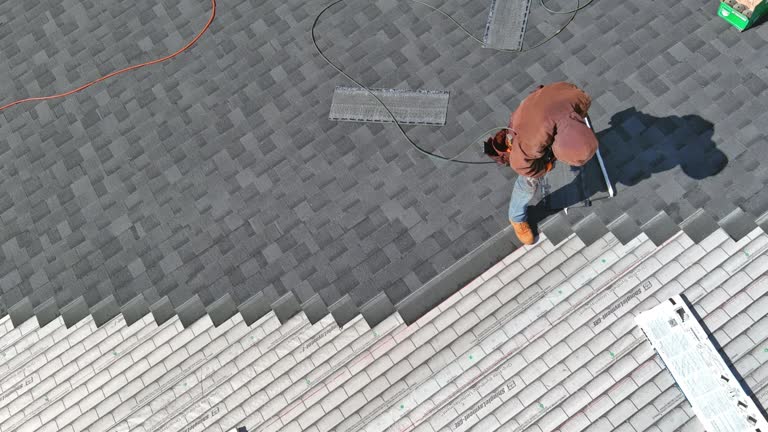
A hailstorm can pass in a few minutes, but its effects on your roof can last for years. Many homeowners never notice the problem because the roof looks fine from the driveway. Small bruises, missing granules, and hairline cracks are easy to miss from the ground.
Hail damage to asphalt shingles often stays hidden until a leak appears months later. By then, water may have soaked the decking and insulation. Finding the problem early saves money and protects the rest of your home.
This guide explains how to spot hail damage to asphalt shingles, what a proper post-hail roof inspection involves, and when to call a professional. The team at Texas Metal Roofing hears many questions from homeowners after storms. To see which roofing options are available in North Texas, you can read about metal roofing Frisco services for context.
Why Hail Damages Asphalt Shingles
Asphalt shingles have a fiberglass base mat. A layer of asphalt covers the mat, and small mineral granules sit on top. The granules protect the asphalt from sunlight and help the roof shed water.
When hail strikes, it hits the surface with real force. The impact can knock granules loose, crush the mat, or crack the shingle. A roof that has taken a few hits may still look normal. The weakness shows up over time as the exposed asphalt wears down faster than it should.
How Hail Size and Speed Affect Shingle Damage
Not every storm causes harm. Pea-sized hail rarely hurts a healthy roof. Hail about one inch across, roughly the size of a quarter, is where shingle damage often begins. Larger stones, such as golf ball- or baseball-sized hail, can fracture shingles and even puncture the roof deck.
Wind also matters. Hail driven by strong wind hits at an angle and with more force. It usually damages the slopes facing the storm more than the others.
How Roof Age Changes the Risk
Older shingles are more brittle. After 10 to 15 years of sun and heat, asphalt dries out and loses flexibility. A hailstone that a new shingle would absorb can crack an older one. If your roof is already aging, even moderate hail can cause serious problems.
How a Hail-Damaged Roof Gets Worse Over Time
A hail-damaged roof rarely fails on the day of the storm. Instead, the damage builds slowly. Bare asphalt breaks down under sunlight, bruised areas weaken, and small cracks let in water during every rain. Over a season or two, a minor issue can become a leak, rotted decking, or mold in the attic. This delay is the main reason a post-hail roof inspection is worth doing, even when nothing seems wrong.
Common Signs of Hail Damage to Asphalt Shingles
Knowing what to look for makes the inspection easier. The signs below are the most common indicators of hail damage to asphalt shingles.
Bruises and Soft Spots
A bruise is one of the clearest signs. It looks like a dark, slightly sunken spot where the hailstone landed. When you press on it gently, the area feels soft, much like a bruise on a piece of fruit.
A bruise means the fiberglass mat underneath has been crushed or fractured. The shingle may look intact, but it can no longer protect the roof properly.
Granule Loss
Some granule loss is normal as a roof ages. Hail-related loss looks different. It forms circular or oval patches with fresh, shiny asphalt, often in a random pattern. You may also find loose granules in your gutters or at the end of downspouts after a storm.
Cracks and Fractures
Large hail can crack a shingle outright. Cracks may spread from the point of impact. In severe cases, you will see torn or missing pieces, or even a hole. Look closely at the edges and corners of each shingle. These areas are thinner and break more easily.
Spatter Marks and Oxidation Clues
Hail can wipe away surface dirt, algae, or oxidation. This leaves clean, bright marks called spatter marks. They are easiest to see on older roofs and fade within a few months as weather covers them again. If you see them, the storm was strong enough to leave a mark.
Damage to Other Parts of the Property
Your roof is not the only thing hail hits. Check these items as well:
Gutters and downspouts with dents
Roof vents, flashing, and metal caps with dimples
Window screens and siding with chips or holes
Painted surfaces with dings
Outdoor furniture, grills, and air conditioner units with dents
Dented metal parts are strong evidence that hail struck your property. They also give a rough idea of how large the hailstones were.
Roof Inspection After Hail: A Step-by-Step Process
A careful roof inspection after hail does not need to be complicated. Follow these steps in order, and stop if anything feels unsafe.
Step 1: Put Safety First
Wait until the roof is dry. Wet shingles are slippery, and damaged shingles can break underfoot. If your roof is steep, high, or in poor condition, stay on the ground. Many homeowners can complete a good first check without ever climbing up.
Step 2: Walk the Property Perimeter
Start at ground level. Walk around the house and look at:
Gutters, downspouts, and the ground below them for loose granules
Siding, fascia boards, and window frames for dents or chips
Fences, mailboxes, and decks for signs of impact
Garage doors and outdoor equipment for dings
Take photos of everything you find. Place a coin or ruler beside each mark to show its size.
Step 3: Inspect the Roof Surface
Use binoculars or a phone camera with zoom to scan each slope. Look for dark spots, bare patches, and cracked or missing pieces. Pay close attention to ridge caps, valleys, and areas around vents.
Professionals often use a method called a test square. They mark a section of about 10 feet by 10 feet on each slope and count the hail hits inside it. Many insurers use this count to decide whether a slope qualifies for repair or replacement. The exact threshold varies by company, so check your policy.
Step 4: Check the Attic and Ceilings
Damage inside the home can point to roof problems. Go into the attic with a flashlight and look for:
Water stains on the underside of the roof deck
Damp or compressed insulation
Small beams of daylight coming through the roof
Dark streaks or mold growth
Also check ceilings and upper walls for new stains or peeling paint. A slow leak can take weeks to appear.
Step 5: Document Everything
Write down the date of the storm and the hail size, if you know it, and keep all photos in one folder. Local weather reports and news can confirm the storm. Good records make an insurance claim much easier.
Repair or Replace After Hail Damage to Asphalt Shingles
Once the inspection confirms hail damage to asphalt shingles, the next question is whether to repair or replace the roof. The answer depends on the extent of the damage, the roof’s age, and the condition of the layers underneath.
When Repair Makes Sense
Repair works well when damage is limited to a small area. A few cracked shingles can be replaced without touching the rest. This is common on newer roofs that took only light hits. The repair should match the existing shingles as closely as possible.
When Replacement Is the Better Choice
Replacement is often the right call when damage is widespread. Signs include many bruised shingles on each slope, exposed decking, repeated leaks, or a roof that is already near the end of its life. Patching a badly damaged roof can cost more over time than a full replacement.

During this stage, some homeowners look at other materials. Metal roofing is one option because it handles impact differently and often lasts longer than asphalt. Metal can still dent under large hail, so it is not the right fit for everyone, and a good contractor will explain the pros and cons without pressure. Companies that handle roofing installation in Frisco projects can describe how different systems perform in North Texas weather.
Conclusion
Hail damage to asphalt shingles is easy to overlook, but the effects add up. Bruises, granule loss, cracks, and dented metal parts are the main signs to look for. A careful roof inspection after hail, both outside and in the attic, shows whether you have a small repair or a larger problem.
Act soon after a storm. Take photos, check the signs described above, and speak to a qualified roofer if anything looks wrong. Early action protects your home, supports your insurance claim, and stops small shingle damage from turning into costly leaks.
If you need help after a storm or want to talk through your options, contact Texas Metal Roofing to start a conversation. You can also learn more about the company’s Metal Roofing Contractor in Frisco, TX, and Metal Roofing Contractor in Colleyville, TX, services before you reach out.