Texas leads the U.S. in hail losses, with the state accounting for nearly one-third of all U.S. hail damage claims in recent years. If you own a home in Grand Prairie, that reality turns roofing into a high-stakes decision: your contractor choice affects not only curb appeal, but also insurance outcomes, resale value, and your home’s ability to handle North Texas wind, heat, and hail.
This guide breaks down how to evaluate roofers in Grand Prairie, TX, homeowners consistently rate highly, what “top-rated” actually means, and which questions to ask before you sign. You’ll also learn 2026 roofing trends, what modern materials perform best locally, and a practical checklist for fast repairs and code-compliant installs.
What “top-rated” means for roofers in Grand Prairie in 2026
In 2026, “top-rated” should mean more than a high star score. For Grand Prairie roofing, the best contractors tend to excel in five measurable areas: licensing/insurance, local code expertise, clear estimating, warranty strength, and verified reputation.
Minimum standard: what every bid should include
A reliable Grand Prairie, TX, roofing estimate should itemize materials, labor, ventilation changes, underlayment type, drip edge, scope of flashing, and disposal. If your proposal is a single number on a one-page sheet, you’re exposed to change orders and quality shortcuts.
Grand Prairie roof realities: weather, insurance, and why fast repairs matter
Grand Prairie sits in one of the most hail-active corridors in the U.S. and sees frequent severe thunderstorms. That’s why fast repairs are more than convenient; they reduce secondary losses (deck rot, insulation saturation, mold risk) and can prevent a minor leak from becoming a multi-trade remediation project.
Storm frequency and claim pressure
Texas has remained a top state for catastrophic events, with severe convective storms accounting for a major share of billion-dollar disasters. Insurers have responded with tighter underwriting and higher deductibles in many markets. In practice, that means the quality of documentation and the code-aligned scope matter more than ever.
Material choices that perform in Grand Prairie: shingles vs. metal in 2026
In 2026, homeowners are balancing durability, insurance considerations, and long-term operating costs. That’s why “ Metal Roofing Contractor in Grand Prairie, TX” and “ metal roofing installers near me” searches are rising alongside impact-rated shingle interest.
Asphalt shingles
Architectural asphalt remains common due to cost and aesthetics. Many homeowners ask about impact ratings because insurers may recognize better performance in hail-prone areas. The Insurance Institute for Business & Home Safety (IBHS) has shown that roof covering performance varies significantly by system and installation quality, and that resilient assemblies can reduce damage pathways .
Metal roofing: where it shines
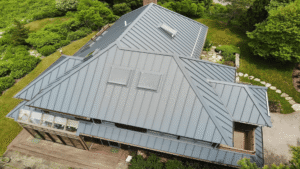
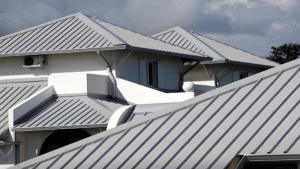
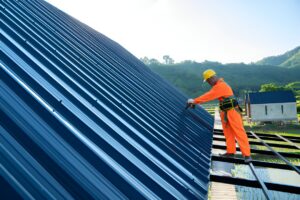
A qualified metal roofing contractor in Grand Prairie, TX, can recommend options such as standing seam or stone-coated steel. Metal can offer longevity and strong wind performance when installed correctly, but it’s not “dent-proof,” and poor detailing around penetrations can increase the risk of leaks. The value comes from system design underlayment, clips/fasteners, expansion movement, and flashing craftsmanship.
Pro tip: ask about the entire roofing “system,” not just the surface
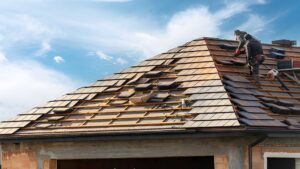
High-performing roofs are assemblies: deck condition, underlayment, ice/water barrier placement, ventilation, flashing, drip edge, and penetrations. A “cheap” bid often cuts precisely those details that prevent leaks in wind-driven rain.
Cost, timelines, and what a fair bid looks like
Pricing in DFW shifts with storm demand, labor availability, and material costs. Nationally, remodeling costs remain elevated relative to pre-2020 levels, and roofing is no exception. Homeowners should expect wider bid spreads after hail events because crews get booked fast and supply chains tighten.
2026 trends in Grand Prairie roofing: modern materials, AI, and documentation
Roofing in 2026 is more technical than it was even five years ago. Homeowners benefit when contractors adopt better diagnostics, clearer documentation, and resilient assemblies designed for severe convective storms.
Trend 1: Impact performance and resilience conversations are mainstream
More homeowners ask about Class 4 impact-rated shingles and upgraded underlayments after high-claim years. Industry research continues to emphasize that resilience is not just product selection; it’s installation quality, edge detailing, and robust flashing.
Trend 2: digital estimating, aerial measurements, and faster supplements
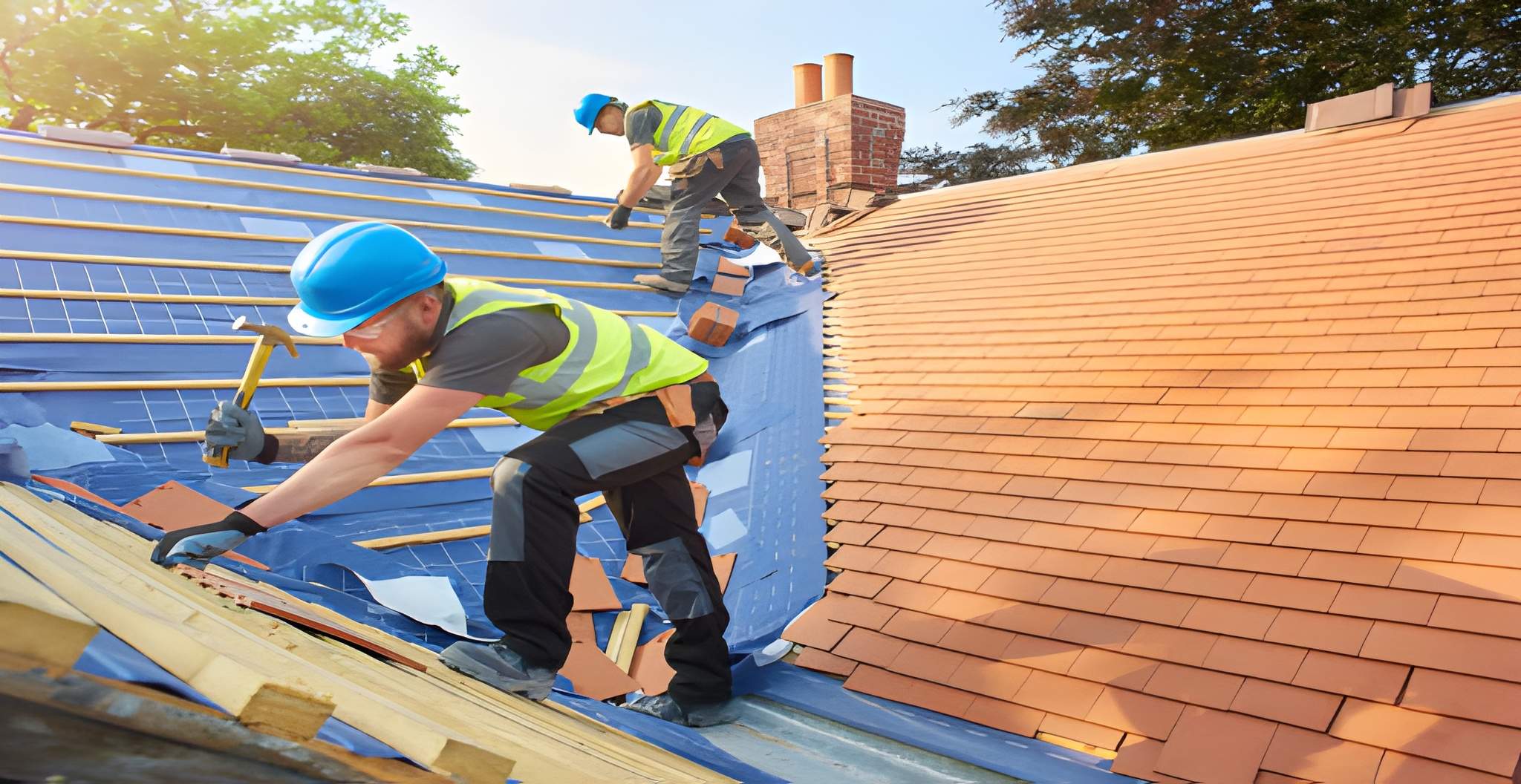
Many top contractors use aerial measurement tools and photo-driven reports to reduce measurement errors and speed up estimating. This process also improves claim documentation: annotated photos, line-item scope, and code notes can shorten supplement cycles and reduce back-and-forth.
Trend 3: better ventilation and attic health as a selling point
In hot climates, contractors increasingly include intake/exhaust calculations and propose balanced systems. Energy efficiency remains a homeowner priority; the U.S. EIA continues to track that space cooling is a major driver of residential electricity use.
Trend 4: stronger focus on BBB credibility and verified reviews
As review fraud becomes more common across industries, homeowners lean on credibility signals: BBB complaint resolution patterns, verified purchase reviews, and local referrals. The best roofers in Grand Prairie, TX, can explain their process and provide recent, local references without hesitation.
Common mistakes to avoid
Most roofing regret comes from a few preventable decisions: rushing, choosing the lowest bid without scope parity, or trusting vague promises. Use these guardrails whether you’re hiring for fast repairs or a full replacement.
Mistake 1: choosing the lowest bid with a thin scope
If one estimate is dramatically cheaper, it often excludes flashing replacement, drip edge, ventilation upgrades, or realistic decking allowances. Pro tip: require an itemized scope and a set of diagrams/photos before comparing prices.
Mistake 2: not verifying who’s actually doing the work
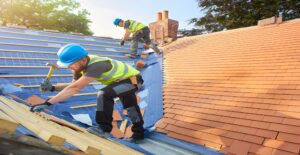
Ask whether the company uses employees or subs and who supervises. Request the jobsite lead’s name and confirm they’ll be present. Pro tip: get daily update expectations in writing.
Mistake 3: skipping code and permitting conversations
Even when permits aren’t strictly required for every repair, code-aligned work is still the benchmark for quality and claim defensibility. Pro tip: ask the roofer to cite the local requirements that affect your project (drip edge, ventilation, flashing, valley details).
Mistake 4: signing a contract with vague change-order rules
Roofing projects frequently uncover hidden damage. Pro tip: your contract should state exactly how change orders are priced, approved, and documented before any additional work is performed.
Mistake 5: treating metal roofing as “just another roof”
Metal requires specialist detailing. If you’re searching for metal roofing installers near me, vet for system experience: penetrations, transitions, closure details, and movement/expansion planning. Pro tip: ask for 3 local metal addresses you can drive by.
A practical hiring checklist for Grand Prairie homeowners
Use this checklist to consistently evaluate Grand Prairie roofing contractors. It’s designed to fit storm-season urgency while still protecting you from expensive mistakes.
Conclusion: How to choose the right Grand Prairie roofer with confidence
Hiring the right contractor is less about finding a logo you recognize and more about validating process, documentation, and craftsmanship. In a hail- and wind-exposed market, the best outcomes come from roofers who treat your roof as a system and can prove it with a clear scope and clean execution.
Next step: shortlist 3 contractors, request photo-based inspections, and compare bids using the checklist above. If you’re considering metal, specifically interview a Metal Roofing Contractor in Grand Prairie, TX, and require detailed examples of penetration and flashing work before you commit.
If you have questions about your roofing project or would like a professional assessment from an experienced team, contact us today. We’ll help you evaluate your options, understand the scope of work, and make an informed decision that protects your property for years to come.